
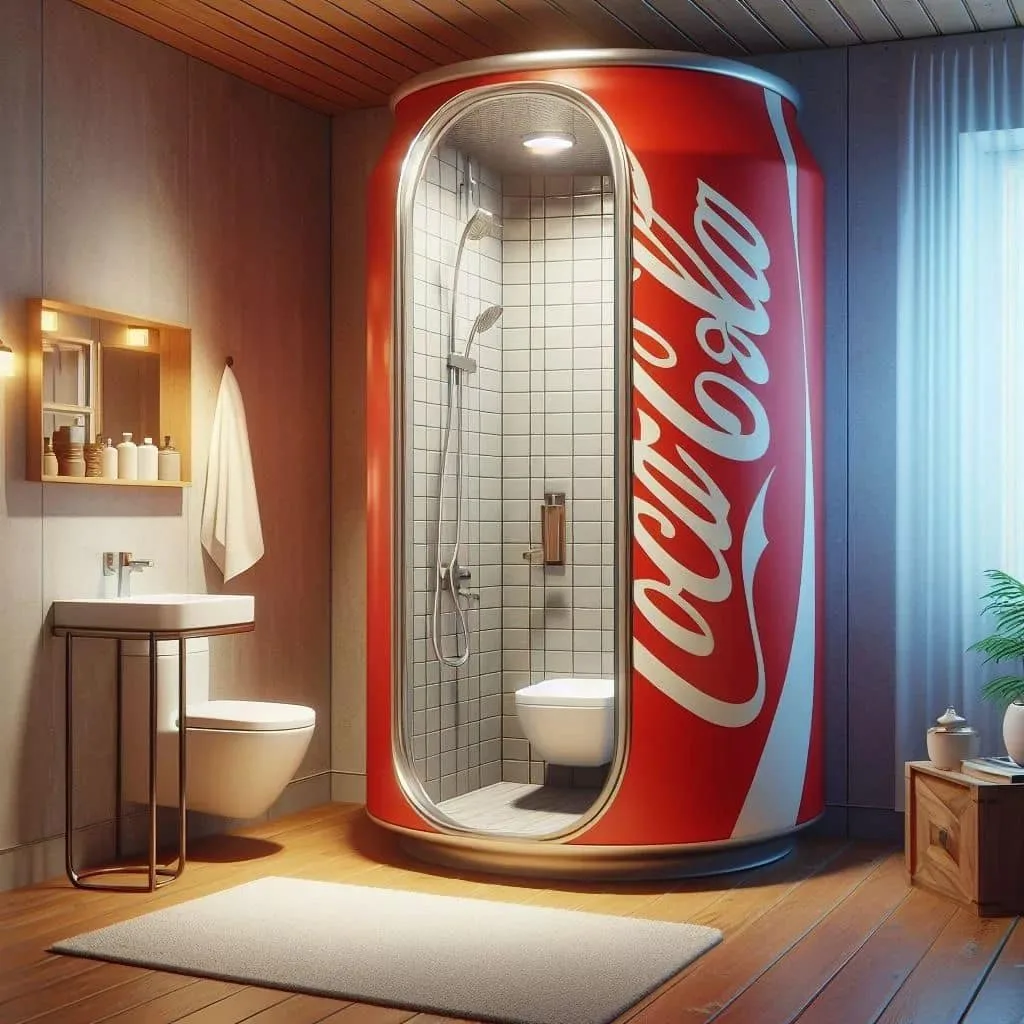
When Sarah Martinez first sketched her vision for a Coca-Cola themed bathroom on a napkin during her lunch break, her colleagues thought she’d lost her mind. Yet six months later, that whimsical doodle transformed into a viral sensation—a standing bathroom capsule designed to replicate the iconic red-and-white Coke can. This audacious coke can bathroom design represents more than just quirky décor; it symbolizes a growing movement where homeowners embrace nostalgia, brand loyalty, and unapologetic personality in their most private spaces. As contemporary interior design continues pushing boundaries, these themed bathroom installations challenge our perception of what constitutes acceptable home aesthetics.
The concept might sound outrageous at first—why would anyone want their bathroom resembling a beverage container? But dig deeper, and you’ll discover the coke can bathroom design taps into something profoundly human: our desire for spaces that tell stories and spark conversations. These installations aren’t merely functional fixtures; they’re experiential art pieces that transport users into a three-dimensional brand universe, blending childhood memories with cutting-edge spatial design in ways traditional bathrooms never could.
Table of Contents
The Origins and Appeal of Coke Can Bathroom Design
The coke can bathroom design phenomenon emerged from Asia’s capsule hotel culture, where maximizing limited space demanded creative solutions. Japanese designers pioneered these standing bathroom units in the early 2010s, initially focusing on space efficiency rather than aesthetic storytelling. However, as social media amplified demand for Instagram-worthy interiors, manufacturers recognized an opportunity to transform utilitarian pods into branded experiences. The Coca-Cola version represents the pinnacle of this evolution, where form and function merge with cultural iconography.
What makes the coke can bathroom design so compelling goes beyond novelty. These units typically measure six feet tall and three feet in diameter, mirroring actual Coke can proportions scaled for human use. The exterior features the classic Spencerian script logo, wave patterns, and nutrition labels—all meticulously reproduced in weather-resistant materials. Inside, designers incorporate red LED mood lighting, chrome fixtures, and even subtle carbonation sound effects that bubble through hidden speakers. This attention to detail creates an immersive environment that transports users beyond mere bathroom functionality into a theatrical brand experience.
For homeowners considering this bold choice, the coke can bathroom design serves multiple purposes. It becomes an instant conversation starter at gatherings, a nostalgic retreat for cola enthusiasts, and a functional solution for properties lacking traditional bathroom space. Urban lofts, basement entertainment areas, and pool houses represent ideal locations where these installations shine. The modern bathroom concepts showcased in such designs demonstrate how personal spaces can reflect individual passions rather than conforming to conventional neutrality. Each coke can bathroom design installation makes an unapologetic statement: this homeowner values creativity, humor, and design courage over safe, forgettable choices.
Practical Considerations and Installation Requirements
Implementing a coke can bathroom design requires more than enthusiasm—it demands careful planning and professional expertise. These freestanding units typically arrive as prefabricated modules, though custom-built versions allow greater personalization. Standard installations include a toilet, compact sink, ventilation system, and integrated lighting, all engineered to fit within the cylindrical constraints. The curved walls present unique challenges for fixture placement, requiring specialized mounting brackets and plumbing configurations that differ significantly from conventional rectangular bathrooms.
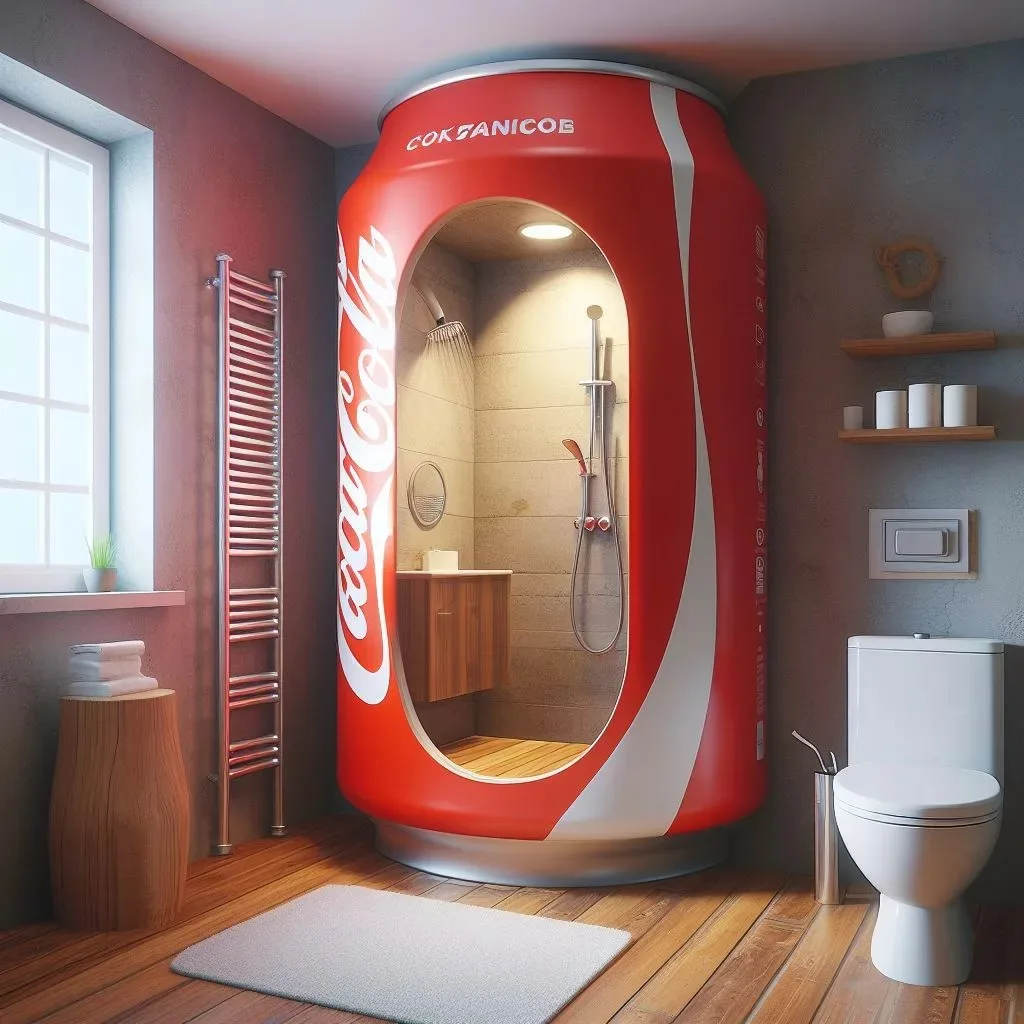
Before committing to a coke can bathroom design, homeowners must address several critical factors. Floor load capacity becomes paramount since these units, once fully installed with plumbing and fixtures, can weigh between 800 and 1,200 pounds. Structural engineers should evaluate whether existing flooring can support this concentrated weight or if reinforcement is necessary. Plumbing access presents another consideration—waste lines and water supply must connect to your home’s existing systems, potentially requiring extensive modifications. Most installations position units near exterior walls to simplify ventilation ducting, as proper air circulation prevents moisture buildup within the enclosed space.
The financial investment in a coke can bathroom design varies dramatically based on customization level and installation complexity. Basic prefabricated units start around $8,000 to $12,000, while fully customized installations with premium materials and advanced features can exceed $30,000. This price range includes the unit itself but typically excludes professional installation, plumbing connections, and electrical work. According to Remodeling Magazine’s Cost vs. Value Report, unique bathroom installations rarely recoup their full investment upon resale, making the coke can bathroom design primarily a personal indulgence rather than a practical investment strategy for property value enhancement.
Customization Options and Design Variations
While the classic red Coca-Cola aesthetic dominates, the coke can bathroom design concept has spawned numerous variations reflecting different beverage brands and personal preferences. Some manufacturers offer Diet Coke silver versions, Coke Zero black editions, or even vintage-inspired designs featuring retro logos from different decades. This flexibility allows homeowners to align their bathroom with broader interior themes or personal brand affinities. Beyond Coca-Cola variations, the standing bathroom cylinder concept has expanded to include other iconic beverage containers, from energy drink cans to craft beer designs, each bringing its own color palette and cultural associations.
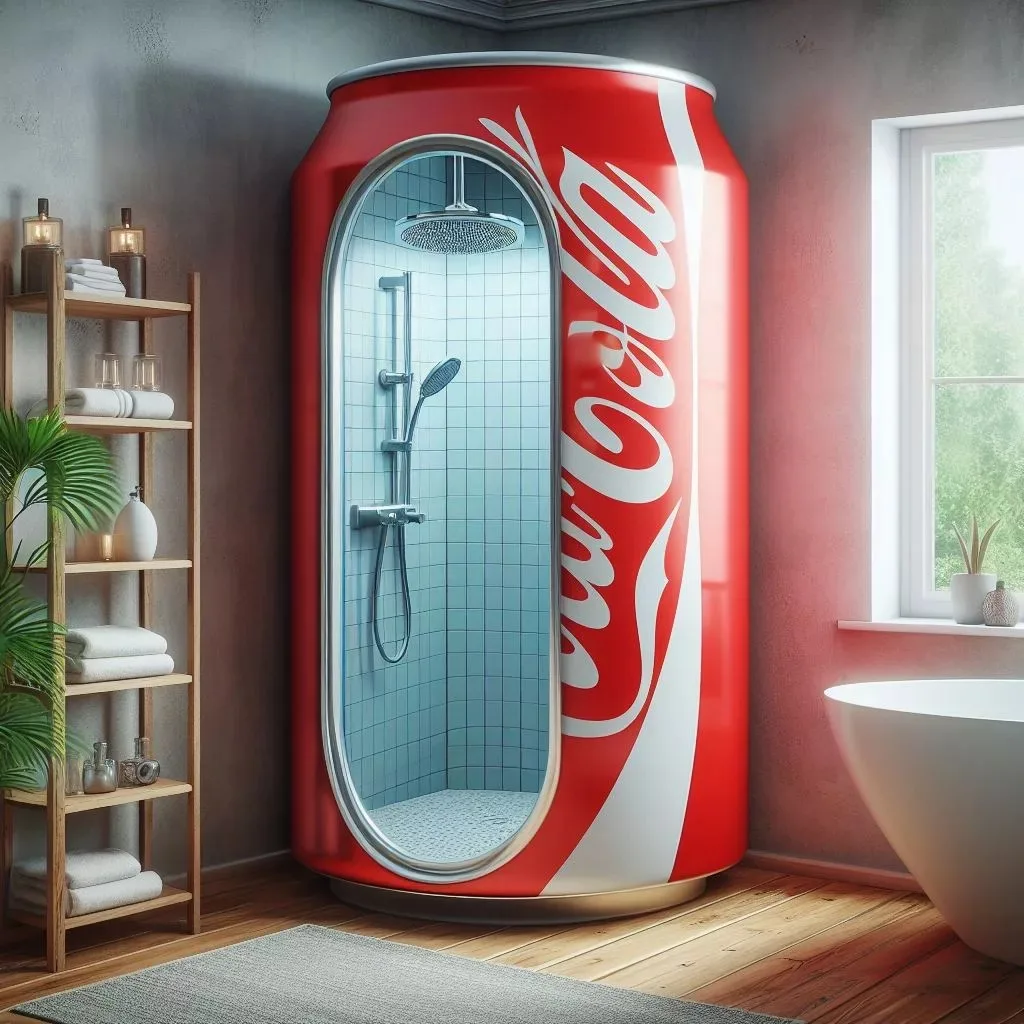
Interior customization transforms each coke can bathroom design from novelty to genuinely functional space. Premium models incorporate heated flooring, rain shower heads adapted to curved ceilings, and smart mirrors with integrated displays showing weather, news, or even Coca-Cola advertising from different eras. Storage solutions prove particularly challenging in cylindrical spaces, but innovative designers have developed curved shelving systems and magnetic accessory holders that conform to the walls. Some installations feature transparent acrylic sections allowing natural light penetration while maintaining the exterior can aesthetic—a feature particularly valuable when positioning units in windowless spaces.
The bathroom storage innovations adapted for coke can bathroom design applications demonstrate remarkable ingenuity in maximizing limited space. Rotating storage drums, retractable shelving, and hidden compartments integrated into the curved walls provide surprising capacity despite the compact footprint. Lighting customization represents another area where owners personalize their installations—beyond the standard red ambient lighting, options include color-changing LEDs synchronized to music, vintage Edison bulbs for nostalgic warmth, or even projection systems that display moving Coca-Cola advertisements on the interior walls. According to Apartment Therapy, these highly personalized spaces reflect a broader trend where homeowners increasingly view bathrooms as personal sanctuaries deserving the same design attention as living rooms or bedrooms, rather than purely utilitarian necessities.
The coke can bathroom design represents more than an eccentric design trend—it embodies a fundamental shift in how we conceptualize personal spaces. These installations challenge the notion that bathrooms must follow conventional rectangular formats or neutral color schemes, instead celebrating bold self-expression and playful nostalgia. While certainly not appropriate for every home or every homeowner, those who embrace this concept create memorable spaces that reflect genuine personality rather than decorator magazine templates. The conversation-starting power of a bathroom resembling your favorite beverage cannot be overstated, transforming mundane daily routines into moments of unexpected delight. Whether you’re seriously considering a coke can bathroom design for your home or simply appreciate innovative spatial concepts, this trend illustrates how interior design continues evolving beyond traditional boundaries. Ready to bring this bold vision into your space? Explore more unconventional design ideas at Design Haven Home, where we celebrate homeowners brave enough to transform the ordinary into the extraordinary. Your bathroom doesn’t have to be boring—make it a statement that nobody will forget.
Frequently Asked Questions
How much does a coke can bathroom design cost?
A coke can bathroom design typically costs between $8,000 and $12,000 for basic prefabricated units, while fully customized installations with premium features can exceed $30,000. These prices generally exclude professional installation, plumbing connections, and electrical work, which can add several thousand dollars depending on your home’s existing infrastructure and the unit’s placement location.
Is a Coca-Cola themed standing bathroom actually functional?
Yes, a coke can bathroom design is fully functional despite its novelty appearance. These units include a complete toilet, compact sink, ventilation system, integrated lighting, and proper plumbing connections. They meet standard bathroom codes and provide genuine utility while maintaining the iconic Coke can aesthetic both inside and outside the cylindrical structure.
Where should I install a coke can bathroom in my home?
The ideal locations for a coke can bathroom design include basement entertainment areas, pool houses, urban lofts, man caves, or any space where a bold statement piece enhances rather than disrupts your overall design scheme. These units work best near exterior walls for simplified ventilation and in areas with adequate floor load capacity to support their 800-1,200 pound weight when fully installed.