

Make your home better by merging your living and dining areas. Today, open-concept design is very popular. It lets homeowners create a space that’s both useful and beautiful.
Renovating or building a new home? The right layout and style can make your living and dining areas shine. This guide will show you how to make a space that looks great and works well for you.
Key Takeaways
- Embrace the benefits of open-concept living by maximizing natural light and creating seamless transitions.
- Strategically plan your kitchen and dining room layout to optimize traffic flow and define activity zones.
- Incorporate smart storage solutions to maintain a clutter-free and organized multifunctional space.
- Experiment with flexible furniture and multipurpose elements to enhance the adaptability of your combined living and dining area.
- Carefully select color schemes and materials to achieve a cohesive and visually appealing design.
Understanding Open Concept Living: Benefits and Challenges
The modern kitchen diner design has adopted the open concept trend. It merges the kitchen and dining areas into one space. This layout brings many benefits but also comes with its own set of challenges.
Maximizing Natural Light Flow
Open concept kitchens and diners let in more natural light. Removing walls makes the space brighter and more airy. Adding windows and skylights can make the room feel even bigger and more welcoming.
Creating Seamless Transitions
For a smooth transition between the kitchen and dining, consistency is key. Using the same flooring, colors, and furniture arrangement helps. This makes the space feel connected and visually appealing.
Managing Acoustics and Privacy
Open concept living has its downsides, like noise and privacy issues. Sound-absorbing materials like rugs and curtains can help. Also, zoning the space and using visual barriers can keep privacy intact.
Understanding the benefits and challenges of open concept designs can lead to a great living space. It combines cooking and dining areas in a seamless way.
Combined Kitchen Dining Room Ideas for Modern Homes
Merging your kitchen and dining area is a smart move for modern homes. It creates a combined cooking eating space that’s both practical and beautiful. Here are some kitchen dining combo ideas to spark your next home makeover:
- Go for an open-concept layout to make the kitchen and dining areas feel like one big space. This boosts the feeling of openness.
- Consider a large kitchen island that works as a prep area and a casual dining spot. It helps merge the two spaces.
- Choose versatile furniture like a dining table that can also be a workspace. Or a banquette that offers both seats and storage.
- Use neutral color palettes and natural materials like wood, stone, and glass. They help create a unified and pleasing look.
By adopting these combined cooking eating space and kitchen dining combo ideas, you can turn your modern home into a seamlessly integrated living and dining area. It meets your cooking and entertaining needs with style and efficiency.
“The kitchen is the heart of the home, and the dining room is where we come together to nourish both our bodies and our relationships.” – Unknown
Essential Space Planning Principles for Open Areas
When you’re planning a kitchen diner remodel or a multifunctional kitchen dining area, think about key space planning principles. These principles are vital for making your open-concept space flow well, function well, and look good.
Traffic Flow Optimization
Plan the paths people will take in your kitchen diner remodel carefully. Make sure there are clear paths for moving around the cooking, dining, and other areas. Place furniture and cabinets in a way that helps people move smoothly and avoids bottlenecks.
Defining Activity Zones
- Make different areas for cooking, eating, and relaxing in your multifunctional kitchen dining area.
- Use furniture, rugs, and lights to show where each area is. This helps each part have its own purpose.
- Arrange these zones in a way that makes them easy to use and get to.
Furniture Placement Strategy
Put your furniture where it makes sense for the space’s use. For example, put the dining table and chairs in the middle. Then, place the kitchen and living areas around it. Make sure the furniture fits well in the open layout.
“Effective space planning is the foundation for a harmonious and functional kitchen diner remodel or multifunctional kitchen dining area.”
By using these key space planning principles, you can make a kitchen diner remodel or a multifunctional kitchen dining area that looks great and works well. It will fit your lifestyle and needs perfectly.
Smart Storage Solutions for Kitchen Diner Combos
Improving storage in a kitchen and dining area can change your kitchen diner decor for the better. Clever storage solutions help make the most of your small kitchen dining nook. This way, you keep the area both functional and stylish.
Wall-mounted shelves or cabinets that stretch from the kitchen to the dining area are a great choice. They can hold books, dishes, and decorations. This makes them blend well with your space’s design.
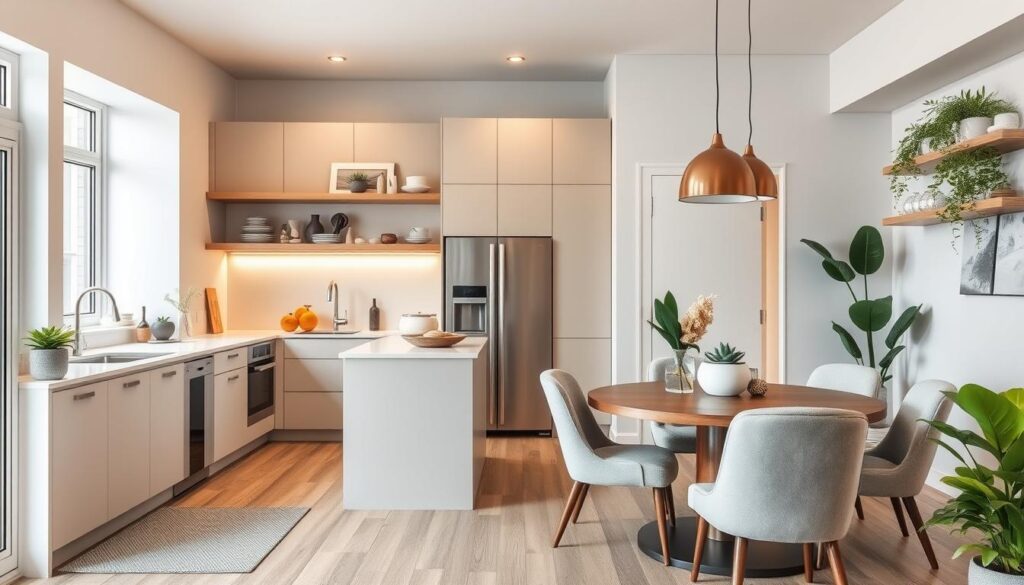
For a cleaner look, think about built-in cabinets along the room’s edges. These custom cabinets offer lots of room for dishes, pantry items, and small appliances. They keep your space tidy and organized.
Using furniture that does double duty is also smart. For example, a dining table with storage or a sideboard with drawers and shelves. These pieces not only store things but also add to your space’s style.
Don’t forget about hidden storage solutions like pullout pantries or under-counter drawers. These clever spots help keep your area neat and looking good.
“The key to a successful kitchen diner combination is to seamlessly integrate storage solutions that enhance the functionality and aesthetic of the space.”
By using these smart storage ideas, you can make your kitchen diner decor into a perfect spot for living and dining. It will meet your specific needs and tastes.
Lighting Techniques for Multifunctional Spaces
Lighting is key in a kitchen and dining room combo. It helps make the space feel good and work well. Each light type adds to the feel and makes your combined kitchen dining room ideas and kitchen diner design inspiration better.
Task Lighting Solutions
Good task lighting is a must in kitchens. It makes sure you can see and work safely. Think about using lights under cabinets, over counters, and spotlights for specific areas. These lights make your combined kitchen dining room ideas work better.
Ambient Lighting Options
Ambient lighting makes your kitchen diner design inspiration feel cozy. Use ceiling lights, like chandeliers or recessed lights, for a soft glow. Wall sconces and floor lamps add depth and style.
Decorative Lighting Features
Decorative lights can really make your kitchen and dining area stand out. Try pendant lights with cool shapes or finishes, big chandeliers, or unique table lamps. They become highlights and add personality to your combined kitchen dining room ideas.
“Lighting has the power to transform a space, setting the mood and highlighting the key features of your combined kitchen and dining room.”
Think about task, ambient, and decorative lighting for a great kitchen diner design inspiration. It will make your space look good and work well for all activities.
Color Schemes and Material Selection for Unified Spaces
Creating a harmonious open concept kitchen dining layout needs careful thought. You must choose the right colors and materials. This way, you can make the kitchen and dining areas look like one.
For colors, pick a palette that connects both spaces. Use neutral bases like whites, grays, or beiges. Then, add accent colors like blues, greens, or metallics. These colors add depth and interest to your open concept kitchen dining layout.
The materials you pick for surfaces, cabinets, and furniture are key. Try to use the same finishes, textures, and tones in your kitchen dining combo ideas. For example, wood tones with matte black hardware or stone countertops look modern and cohesive.
“Consistent color and material choices are the foundation of a visually harmonious open concept space.”
It’s important to find a balance between the kitchen’s function and the dining area’s feel. By choosing colors and materials wisely, you can merge these two areas into a beautiful open concept kitchen dining layout.
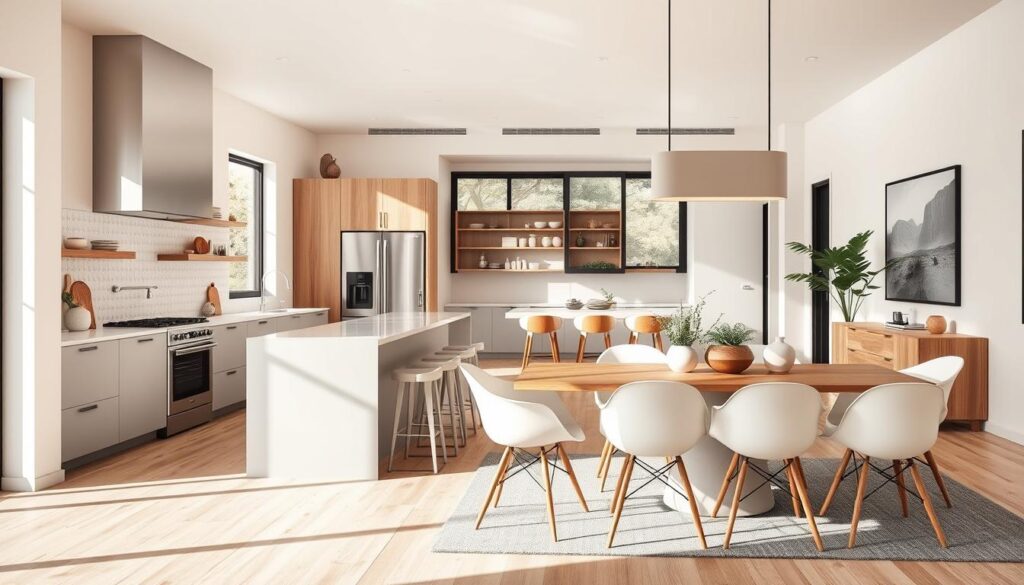
Incorporating Flexible Furniture and Multipurpose Elements
Creating a multifunctional kitchen dining area or one room kitchen diner needs careful thought. You must consider furniture and elements that can change. These adaptable solutions can make your open-plan space work better for you, no matter how your life changes.
Convertible Furniture Options
Choose furniture that can change its use. Look for a dining table that grows to fit more people or a sofa with hidden storage. These versatile pieces help you use your space wisely and keep things tidy.
Space-Saving Solutions
- Use furniture that saves space, like a fold-down table or a small kitchen island with stools that hide under it.
- Make the most of wall space with shelves or a pegboard for your kitchen tools and books.
- Go for slim, multi-use appliances that fit right in with your kitchen design.
Mobile Design Elements
Add design pieces that can move around as you need. Wheeled carts, rolling islands, and modular seating make it easy to change your space. This way, your area can adapt to any activity, whether it’s cooking, dining, or entertaining.
By adding flexible furniture and multi-use elements to your multifunctional kitchen dining area or one room kitchen diner, you create a space that grows with you. These design tips help you make the most of your open-plan area, fitting your changing needs.
Creating Visual Balance in Open Floor Plans
Creating visual balance in your combined cooking and eating space is key. It makes your area look harmonious and pleasing. When you design an open floor plan, focus on proportions, scale, and design elements.
Start by looking at the size and where you put your main furniture. Make sure the dining table, kitchen island, and cabinets fit well with the room size. Use design elements that connect the kitchen and dining, like colors, materials, or lights. This creates a unified look and avoids a disjointed feel.
Think about how people move and what they see in your space. Place furniture and design elements to guide the eye. This makes your kitchen diner remodel balanced and harmonious, using your open floor plan to its fullest.